- The 20th Century (1900–2000)
- 32.7799° N, 96.8085° W
Dealey Plaza
Dallas, Texas · Established 1940
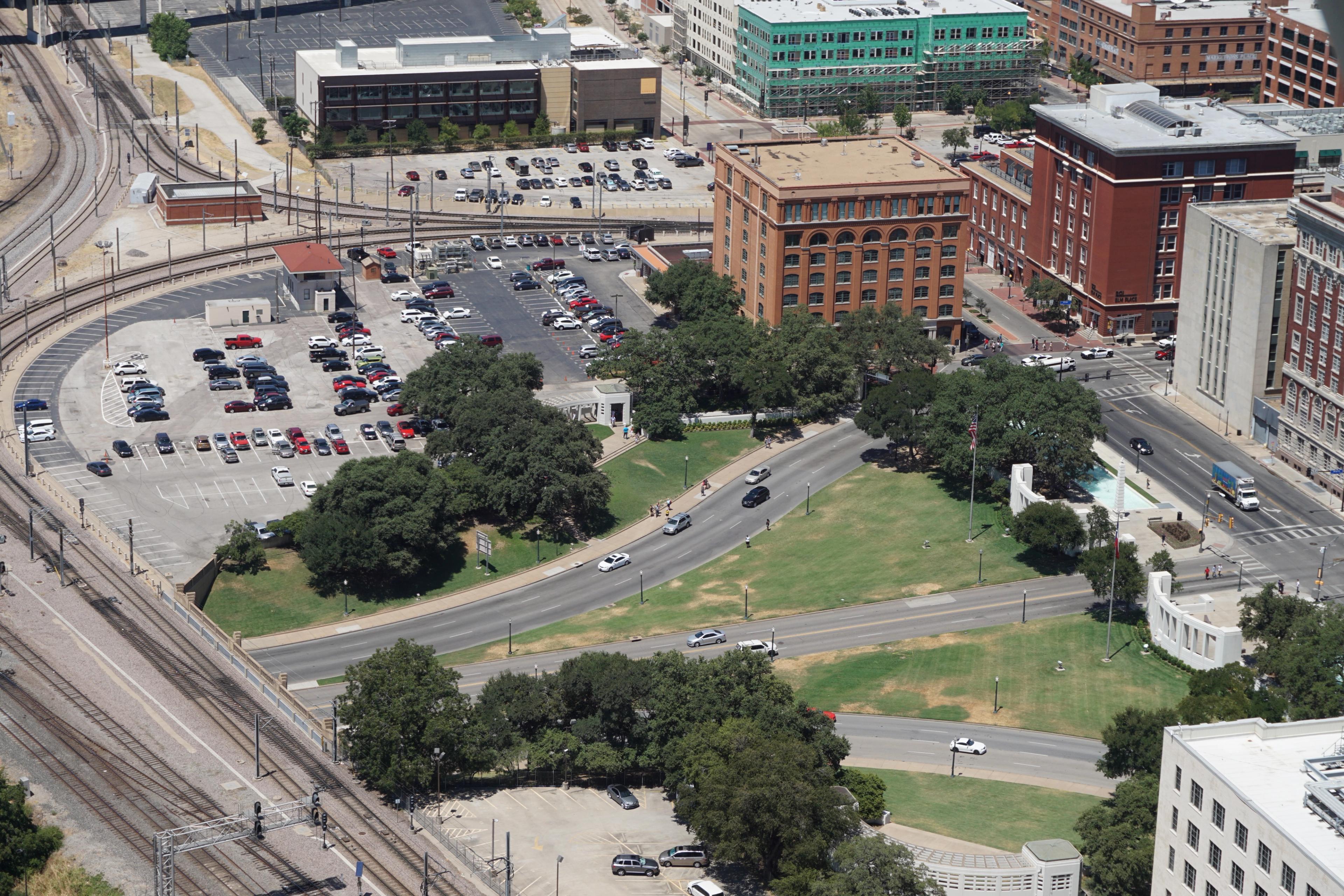
Michael Barera · CC BY-SA · via Wikimedia Commons
Why It Matters
On a bright November afternoon in 1963, a presidential motorcade turned onto Elm Street in this small park and drove into one of the defining traumas of modern American history. President John F. Kennedy was shot and killed in Dealey Plaza, an event so sudden and consequential that it fractured the decade and left the plaza itself, with its grassy knoll and picket fence, permanently etched into the national memory and the subject of enduring controversy.
The History
Dealey Plaza was developed in the 1930s and 1940s as the western gateway to downtown Dallas, named for newspaper publisher George Bannerman Dealey. On November 22, 1963, President John F. Kennedy rode through the plaza in an open motorcade on a visit meant to shore up political support in Texas ahead of the 1964 election.
As the motorcade passed the Texas School Book Depository and turned onto Elm Street, shots rang out at 12:30 p.m., fatally wounding Kennedy and injuring Texas Governor John Connally. The Warren Commission concluded that Lee Harvey Oswald, firing from the sixth floor of the Depository, acted alone, though the event has generated persistent conspiracy theories and continued historical investigation for decades.
The plaza's landscape, including the grassy knoll and the white 'X' marks painted on Elm Street indicating the approximate shooting locations, has become one of the most visited and photographed sites connected to the assassination. Dealey Plaza was designated a National Historic Landmark in 1993, not for the buildings surrounding it but explicitly for its association with the assassination, and the former Depository building now houses the Sixth Floor Museum documenting Kennedy's life, death, and legacy.
Through the Years
- 1940
Dealey Plaza is completed as a landscaped gateway to downtown Dallas
- 1963
President Kennedy is assassinated in the plaza on November 22
- 1964
The Warren Commission concludes Lee Harvey Oswald acted alone
- 1989
The Sixth Floor Museum opens in the former Texas School Book Depository
- 1993
Dealey Plaza is designated a National Historic Landmark
The Archive
 Plate 01
A view of Dealey Plaza, where John F. Kennedy was assassinated.
Michael Barera · CC BY-SA · via Wikimedia Commons
 Plate 02
X marks the approximate location where John F. Kennedy was assassinated in Dealey Plaza.
Fredlyfish4 · CC BY-SA · via Wikimedia Commons
 Plate 03
Grassy Knoll clearly labeled at Dealey Plaza.
// jonCates · CC BY-SA · via Wikimedia Commons
Facts & Figures
History
- Assassination
- November 22, 1963, 12:30 p.m.
- Shooter (Warren Commission)
- Lee Harvey Oswald
Location
- Shooting location
- Texas School Book Depository, 6th floor
Museum
- Sixth Floor Museum
- Opened 1989
Designation
- National Historic Landmark
- Designated 1993
Namesake
- Named for
- George Bannerman Dealey
Landmarks
- Known features
- Grassy knoll; Elm Street 'X' markers
The Register
- Established
- 1940
- Area of significance
- Political history; presidential assassination
Frequently Asked
What happened at Dealey Plaza?
President John F. Kennedy was assassinated here on November 22, 1963, while riding in a motorcade through the plaza, one of the most significant events in 20th-century American history.
Who was responsible for the assassination?
The Warren Commission concluded that Lee Harvey Oswald acted alone, firing from the sixth floor of the Texas School Book Depository, though the event has remained a subject of ongoing debate and conspiracy theories.
What is the Sixth Floor Museum?
It's a museum housed in the former Texas School Book Depository, opened in 1989, documenting the life, presidency, and assassination of John F. Kennedy.
Can you visit Dealey Plaza today?
Yes. The plaza is a public park open at all times, and the adjacent Sixth Floor Museum offers ticketed exhibits on Kennedy's life and the assassination.