19th Century · New York
Central Park
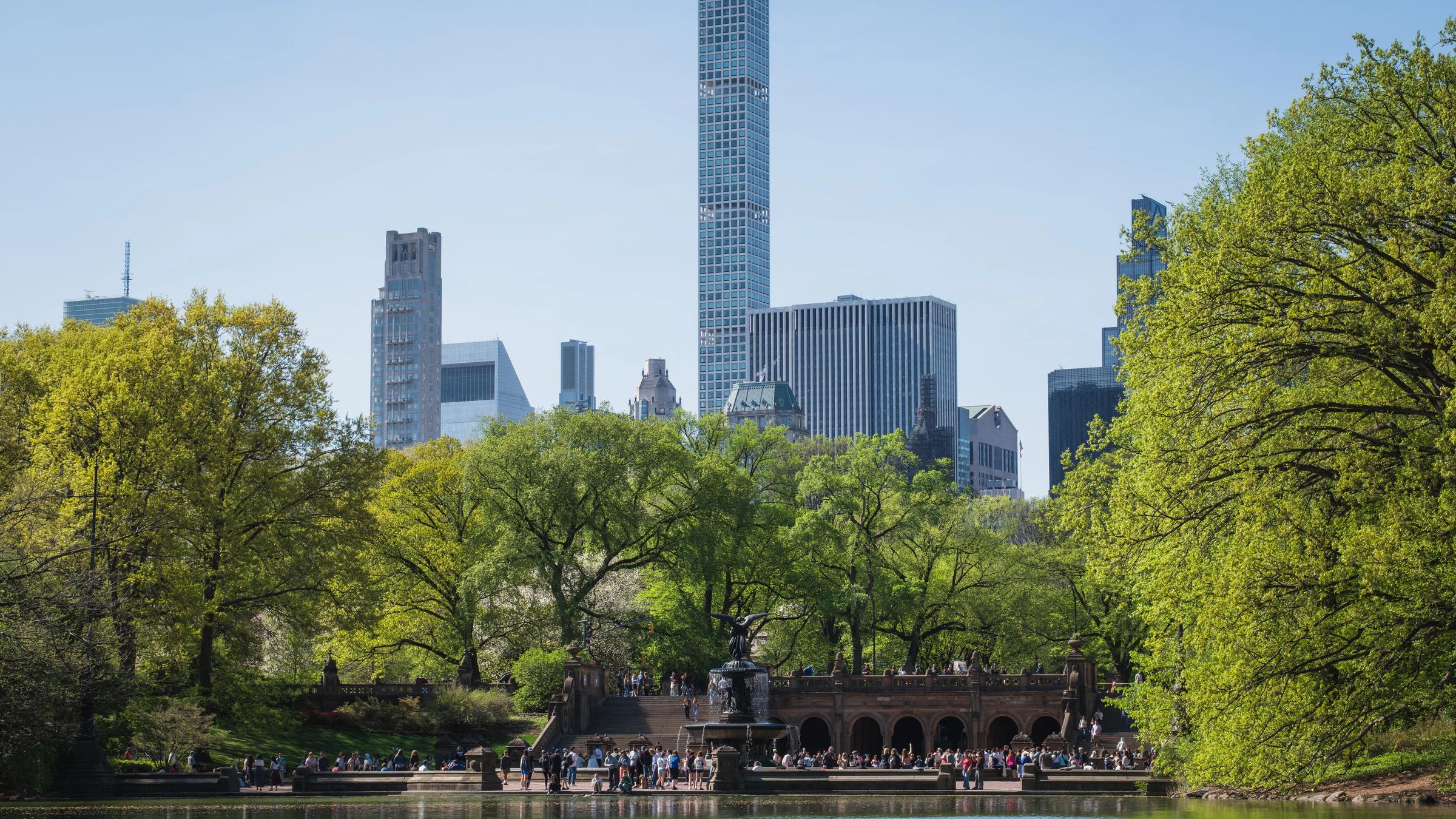
Bethesda Terrace and the lake. — Christian David
Why Central Park Matters
America's first great landscaped public park, built by displacing a thriving African American community called Seneca Village, Central Park became the model for the idea that every city needed green space set aside purely for its residents' well-being.
By the Numbers
Design
- Designers
- Frederick Law Olmsted and Calvert Vaux, winners of the 1858 'Greensward Plan' competition
History
- Seneca Village
- A predominantly African American community displaced via eminent domain to build the park, beginning 1857
- Completion
- Substantially complete by 1876, though refined for decades afterward
Scale
- Size
- 843 acres in the heart of Manhattan
Legacy
- Significance
- The first major landscaped public park built in the U.S. for urban residents' recreation
Landmarks
- Notable features
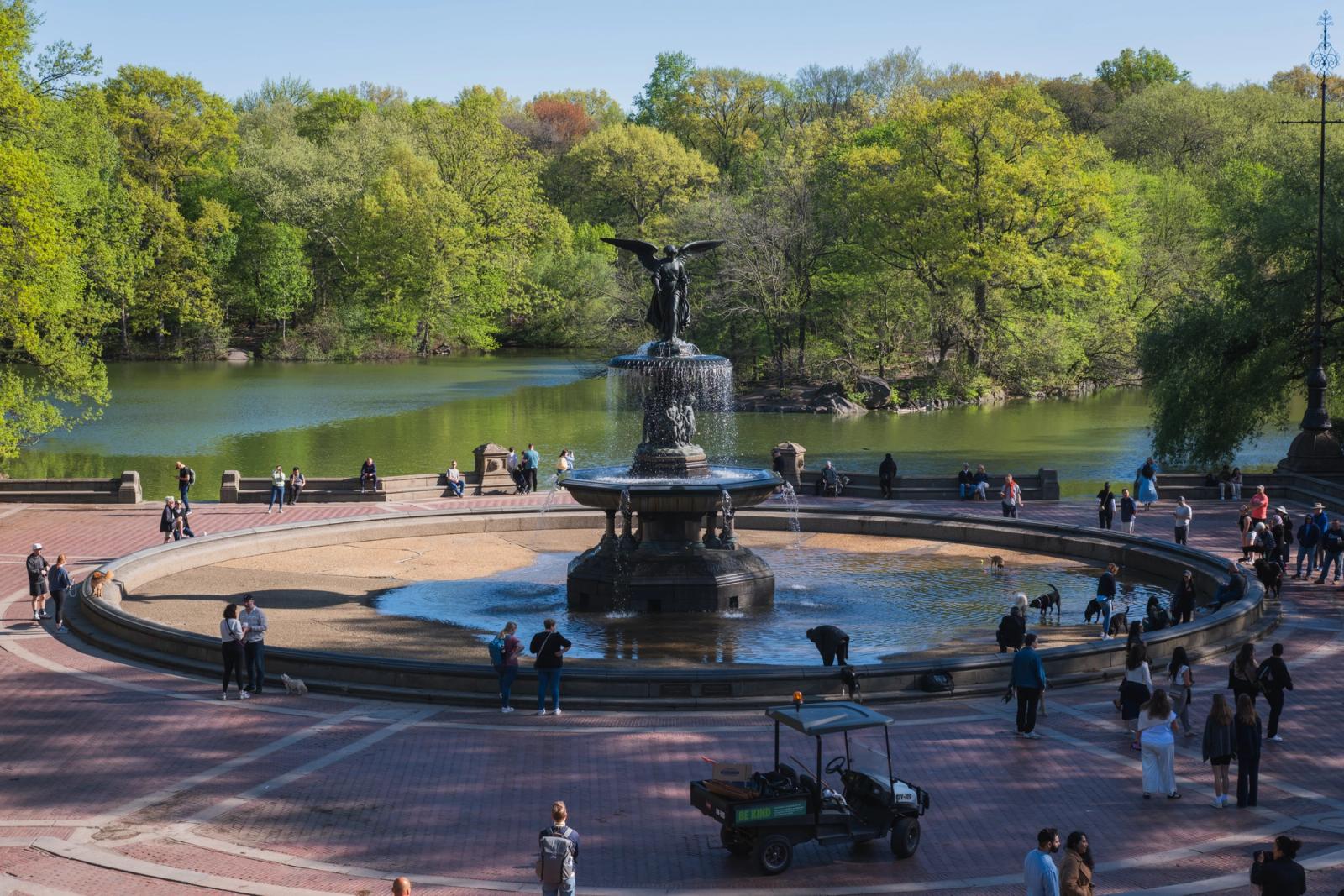
- Bethesda Terrace, Bow Bridge, Belvedere Castle, the Central Park Zoo, Strawberry Fields
Governance
- Management
- NYC Parks, in partnership with the nonprofit Central Park Conservancy since 1980
Timeline
- 1853New York State authorizes the city to acquire land for a public park
- 1857Seneca Village is seized through eminent domain and demolished; construction begins
- 1858Olmsted and Vaux's 'Greensward Plan' wins the park's design competition
- 1876The park is substantially complete
- 1980The Central Park Conservancy is established to fund and manage restoration
Complete History
In 1853, New York State authorized the city to acquire land in the center of Manhattan for a large public park, part of a growing movement among urban reformers who believed dense, industrializing cities needed planned green space for public health and recreation. The chosen site included Seneca Village, a community of roughly 225 residents, many of them African American property owners along with Irish and German immigrant families, which the city seized through eminent domain and demolished beginning in 1857.
In 1858, a design competition selected the 'Greensward Plan' submitted by Frederick Law Olmsted and Calvert Vaux, a scheme of curving paths, meadows, and constructed lakes meant to evoke a pastoral countryside within the city rather than a formal European garden. Construction proceeded over the following two decades, and the park was substantially complete by 1876, though Olmsted and Vaux continued refining its design for years afterward.
Central Park's 843 acres became the template for the American urban park movement, influencing city planners across the country who sought to replicate its blend of accessible, engineered nature. Today the park is jointly managed by NYC Parks and the Central Park Conservancy, a nonprofit established in 1980 that funds and oversees the vast majority of its ongoing restoration, while the history of Seneca Village has drawn renewed attention through archaeological excavation and public memorial efforts in recent decades.
Historic Images
Interesting Facts
- Central Park was built on the site of Seneca Village, a predominantly African American landowning community displaced through eminent domain in 1857.
- Its design, the 'Greensward Plan' by Frederick Law Olmsted and Calvert Vaux, won a public competition in 1858.
- The park spans 843 acres in the middle of one of the world's densest cities.
- It was the first major landscaped public park built in the United States specifically for urban residents' recreation.
- The nonprofit Central Park Conservancy has funded and managed most of the park's restoration since 1980.
Visiting Today
- Hours
- Daily, 6am–1am
- Admission
- Free (individual attractions like the zoo and carousel charge separately)
- Best time to visit
- Weekday mornings for a quieter visit; fall for foliage
- Nearby
- Metropolitan Museum of Art, American Museum of Natural History, Strawberry Fields
Rent a bike or take a guided walking tour to cover the park's 843 acres efficiently
Frequently Asked Questions
What was Seneca Village?
A predominantly African American community of property owners, along with Irish and German immigrant residents, that occupied part of the park's current footprint until the city seized the land through eminent domain and demolished it in 1857 to build the park.
Who designed Central Park?
Frederick Law Olmsted and Calvert Vaux, whose 'Greensward Plan' won a public design competition in 1858 and went on to shape landscape architecture across the country.
How big is Central Park?
843 acres, spanning roughly 51 city blocks in the middle of Manhattan.
Who maintains Central Park today?
NYC Parks owns and operates the park, but the nonprofit Central Park Conservancy, established in 1980, funds and manages the vast majority of its restoration and day-to-day maintenance.