Antebellum · Virginia
Arlington House
Also known as Custis-Lee Mansion, The Robert E. Lee Memorial
Arlington House, the Robert E. Lee Memorial. — National Park Service
Why Arlington House Matters
Arlington House occupies one of the most contested hills in American memory: built as a monument to George Washington, home to the Confederacy's most famous general, and the literal ground from which Arlington National Cemetery grew out of the wounds of the Civil War.
By the Numbers
Architecture
- Architect
- George Hadfield
- Style
- Greek Revival
- Portico
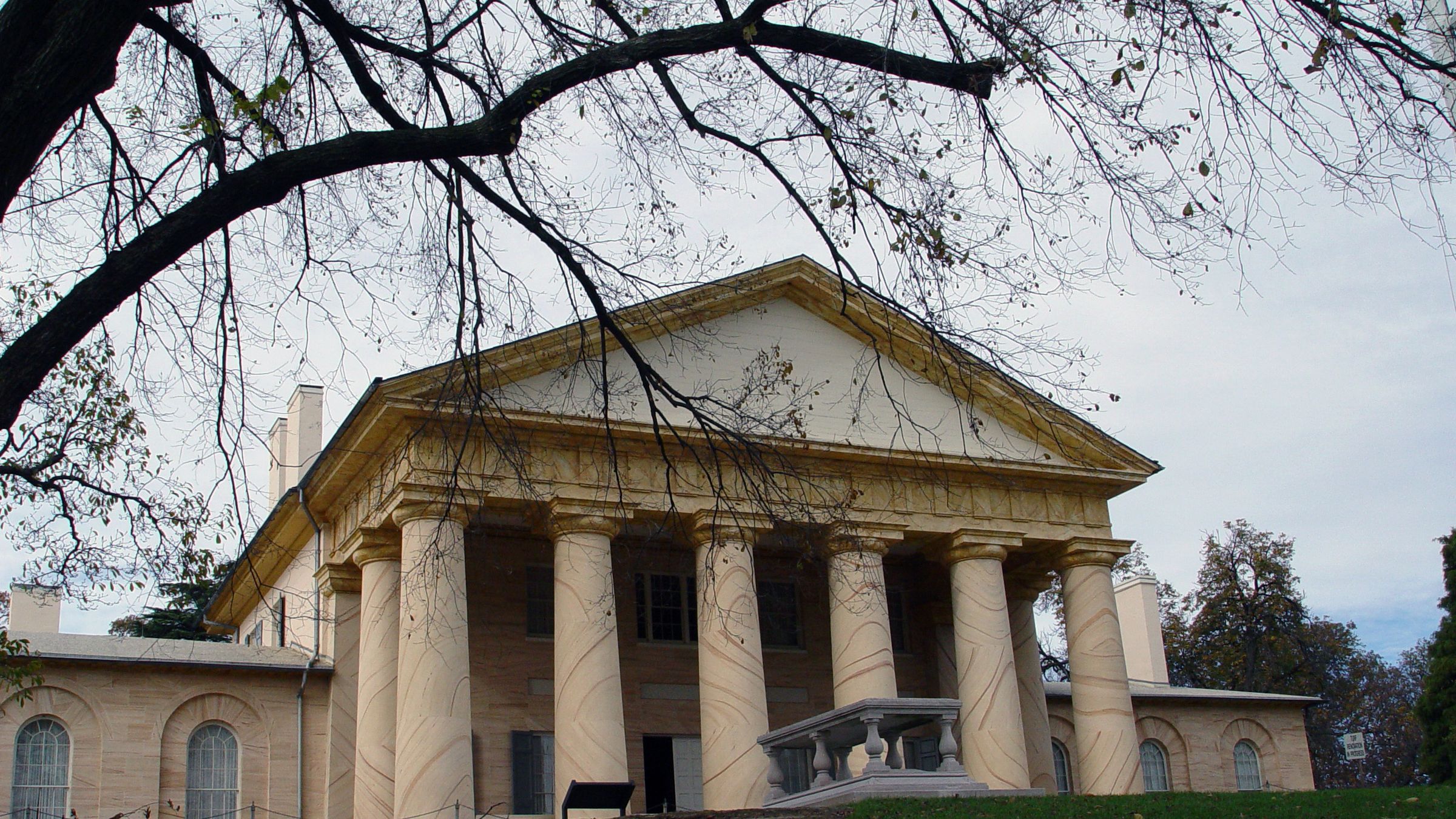
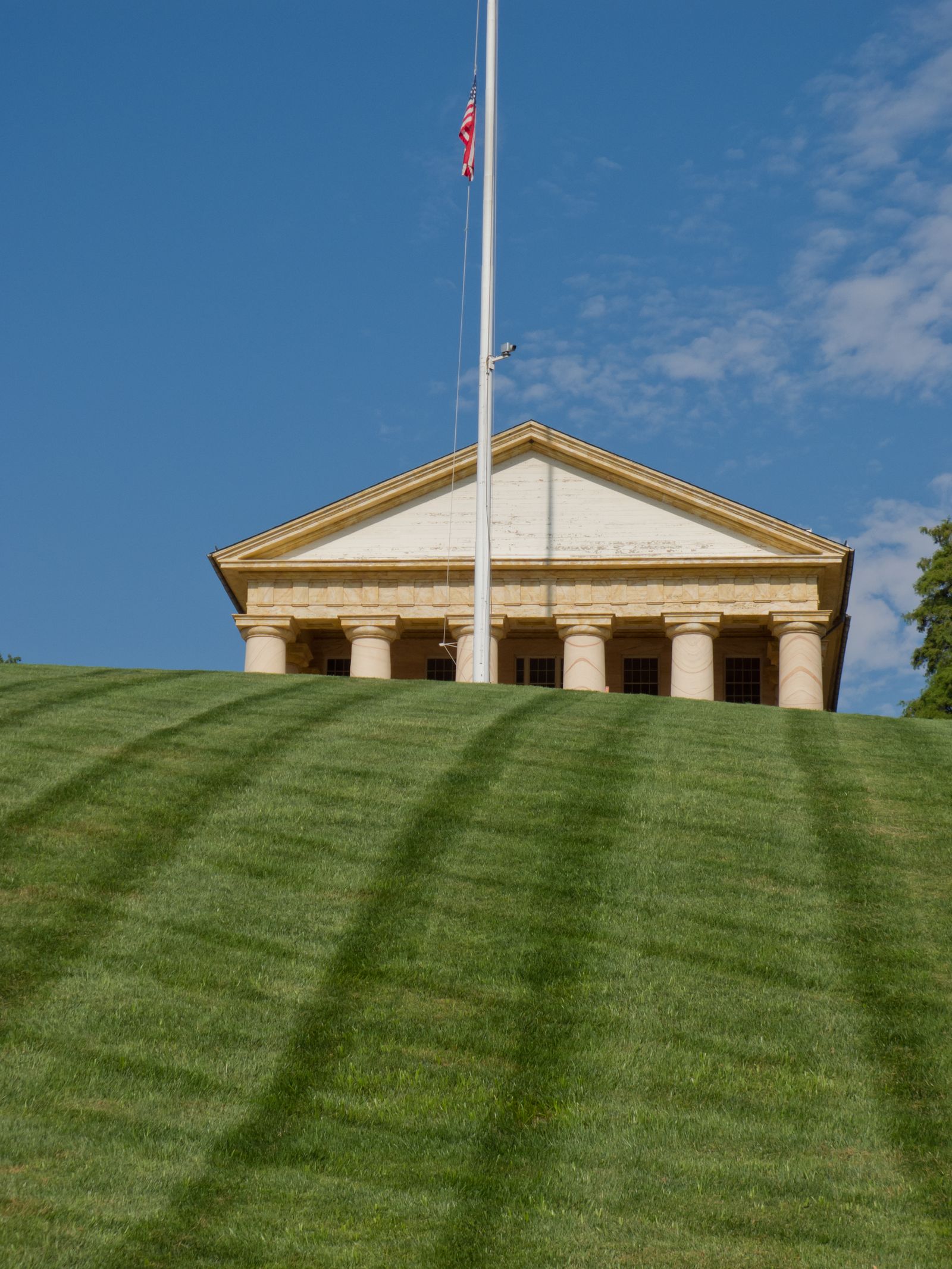
- Eight Doric columns, modeled on the Temple of Hephaestus in Athens
People
- Builder
- George Washington Parke Custis, step-grandson of George Washington
- Enslaved community
- More than 60 people were enslaved by the Custis and Lee families on the estate
Legacy
- Connection to Arlington National Cemetery
- Burials on the estate's grounds beginning in 1864 founded what is now Arlington National Cemetery
Site
- Managing agency
- National Park Service, since 1933
Timeline
- 1802Custis begins constructing Arlington House as a memorial to George Washington
- 1818Construction is substantially complete
- 1831Robert E. Lee marries Mary Anna Custis in the house's parlor
- 1857George Washington Parke Custis dies; Mary Lee inherits a life interest in the estate
- 1861Lee resigns his U.S. Army commission at Arlington House and departs for the Confederacy
- 1864The federal government seizes the estate; burials begin, founding Arlington National Cemetery
- 1925Congress restores the house as a memorial to Robert E. Lee
- 1933The National Park Service assumes management of the site
Complete History
George Washington Parke Custis, the step-grandson and adopted heir of George Washington, began building Arlington House in 1802 on a 1,100-acre estate overlooking the new federal city. Custis conceived the Greek Revival mansion, designed by architect George Hadfield with its commanding eight-column Doric portico, explicitly as a living memorial to his step-grandfather, filling its rooms with Washington relics and calling it a 'treasury' of the first president's memory. Construction proceeded in stages and the house was substantially complete by 1818.
In 1831, Custis's only surviving child, Mary Anna Randolph Custis, married a young army officer named Robert E. Lee in the family parlor at Arlington House. The couple made it their home for three decades, raising seven children there between Lee's military postings. When Custis died in 1857, Mary inherited a life interest in the estate. It was at Arlington House, in April 1861, that Lee agonized over and ultimately resigned his commission in the United States Army rather than lead an invasion of his native Virginia, departing days later to offer his sword to the Confederacy.
Union troops occupied the abandoned estate within weeks of Virginia's secession, and the federal government seized it outright in 1864 after Mary Lee failed to appear in person to pay a wartime property tax — a technicality she could not satisfy from behind Confederate lines. That same year, Quartermaster General Montgomery Meigs began burying Union war dead in the grounds surrounding the mansion, in part, by his own account, to ensure the Lees could never comfortably reclaim their home. The Supreme Court later restored title to the Lees' son in 1882, but he sold the land back to the government. Congress restored the mansion as a memorial to Lee in 1925, and the National Park Service, which has managed it since 1933, now interprets Arlington House alongside the stories of the more than 60 people the Custis and Lee families held in slavery there.
Historic Images
Interesting Facts
- Robert E. Lee lived at Arlington House for 30 years before resigning his U.S. Army commission there in 1861.
- The house was built by George Washington Parke Custis as a memorial filled with relics of his step-grandfather, George Washington.
- More than 60 enslaved people lived and worked on the estate under the Custis and Lee families.
- Arlington National Cemetery grew directly out of wartime burials ordered on the estate's grounds in 1864.
- The mansion's eight-column portico was inspired by the ancient Greek Temple of Hephaestus.
Visiting Today
- Hours
- Daily, 9:30am–4:30pm (NPS; check for seasonal closures)
- Admission
- Free
- Best time to visit
- Weekday mornings, to avoid cemetery crowds
- Nearby
- Arlington National Cemetery, John F. Kennedy gravesite, Women in Military Service for America Memorial
Reachable only by walking through Arlington National Cemetery — allow extra time for security screening and the uphill walk
Frequently Asked Questions
Did Robert E. Lee own Arlington House?
No. The estate legally belonged to his wife, Mary Anna Randolph Custis Lee, who inherited it from her father, George Washington Parke Custis.
Why did the U.S. government start burying soldiers on the property?
In 1864, with Washington's cemeteries full and to guarantee the Lee family could never comfortably reclaim their home, Quartermaster General Montgomery Meigs ordered Union war dead buried close around the mansion — the origin of Arlington National Cemetery.
Is Arlington House connected to enslaved people's history?
Yes. More than 60 people were enslaved by the Custis and Lee families on the estate; the National Park Service now interprets their lives and labor as part of the site's history.
Can visitors tour Arlington House today?
Yes. It is a National Park Service site, free to visit, reached on foot within Arlington National Cemetery.