20th Century · North Carolina
Wright Brothers National Memorial
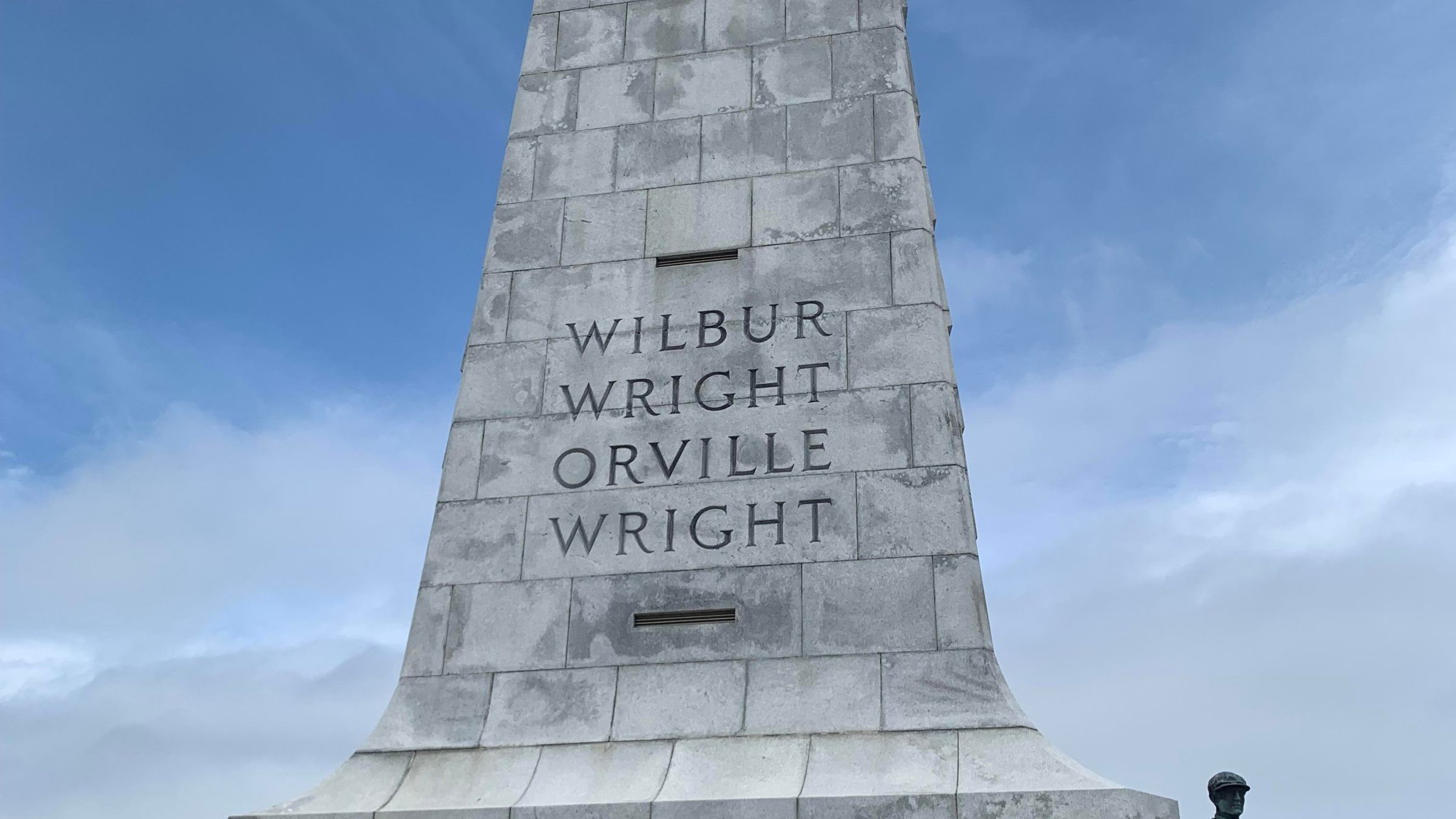
The 60-foot granite monument on Big Kill Devil Hill. — Progress P
Why Wright Brothers National Memorial Matters
The Wright Brothers National Memorial marks the spot where human flight began. On December 17, 1903, on the windswept dunes near Kitty Hawk, North Carolina, Orville and Wilbur Wright made the first successful powered, controlled, and sustained flights of a heavier-than-air aircraft — changing the world in twelve seconds. A soaring granite monument on the hill from which they launched their gliders, and markers tracing that first day's four flights, commemorate one of the defining achievements of the modern age.
By the Numbers
First Flight
- Date
- December 17, 1903
- Pilots
- Orville and Wilbur Wright
- First flight
- 12 seconds, 120 feet (Orville)
- Longest that day
- 59 seconds, 852 feet (Wilbur)
The Memorial
- Monument
- 60-ft granite pylon, dedicated 1932
- Location
- Big Kill Devil Hill, Outer Banks, NC
Today
- Operator
- National Park Service
Timeline
- 1900-1902The Wrights test gliders on the dunes near Kitty Hawk.
- 1903The first powered flights take place on December 17.
- 1903The longest of the day's four flights covers 852 feet in 59 seconds.
- 1927Congress authorizes a national memorial at the site.
- 1932The 60-foot granite monument is dedicated on Big Kill Devil Hill.
- 1953The site is renamed the Wright Brothers National Memorial.
Complete History
Orville and Wilbur Wright were bicycle makers from Dayton, Ohio, who turned their mechanical skill and methodical experiments toward the age-old dream of flight. Seeking steady winds, soft sand for landings, and privacy, they chose the remote Outer Banks of North Carolina. From 1900 to 1902 they tested a series of gliders on the dunes near Kitty Hawk, working out the problems of lift and, crucially, control.
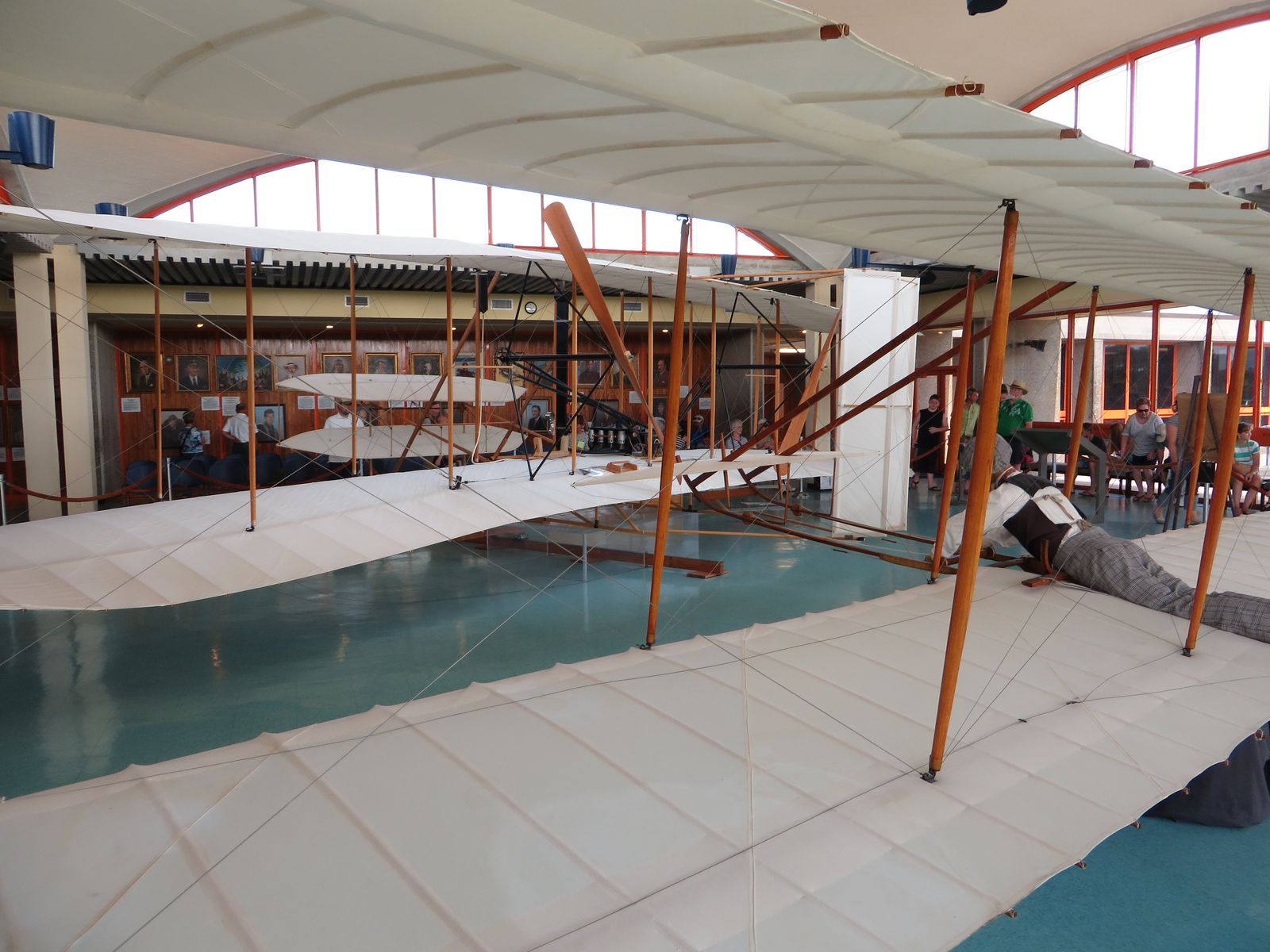
Having solved how to steer a flying machine, they built a powered aircraft, the 1903 Flyer, with a lightweight engine and twin propellers of their own design. On December 17, 1903, at Kill Devil Hills, Orville made the first flight — 12 seconds and 120 feet. The brothers took turns through four flights that morning; the longest, flown by Wilbur, lasted 59 seconds and covered 852 feet. For the first time, a human had flown under power and control.
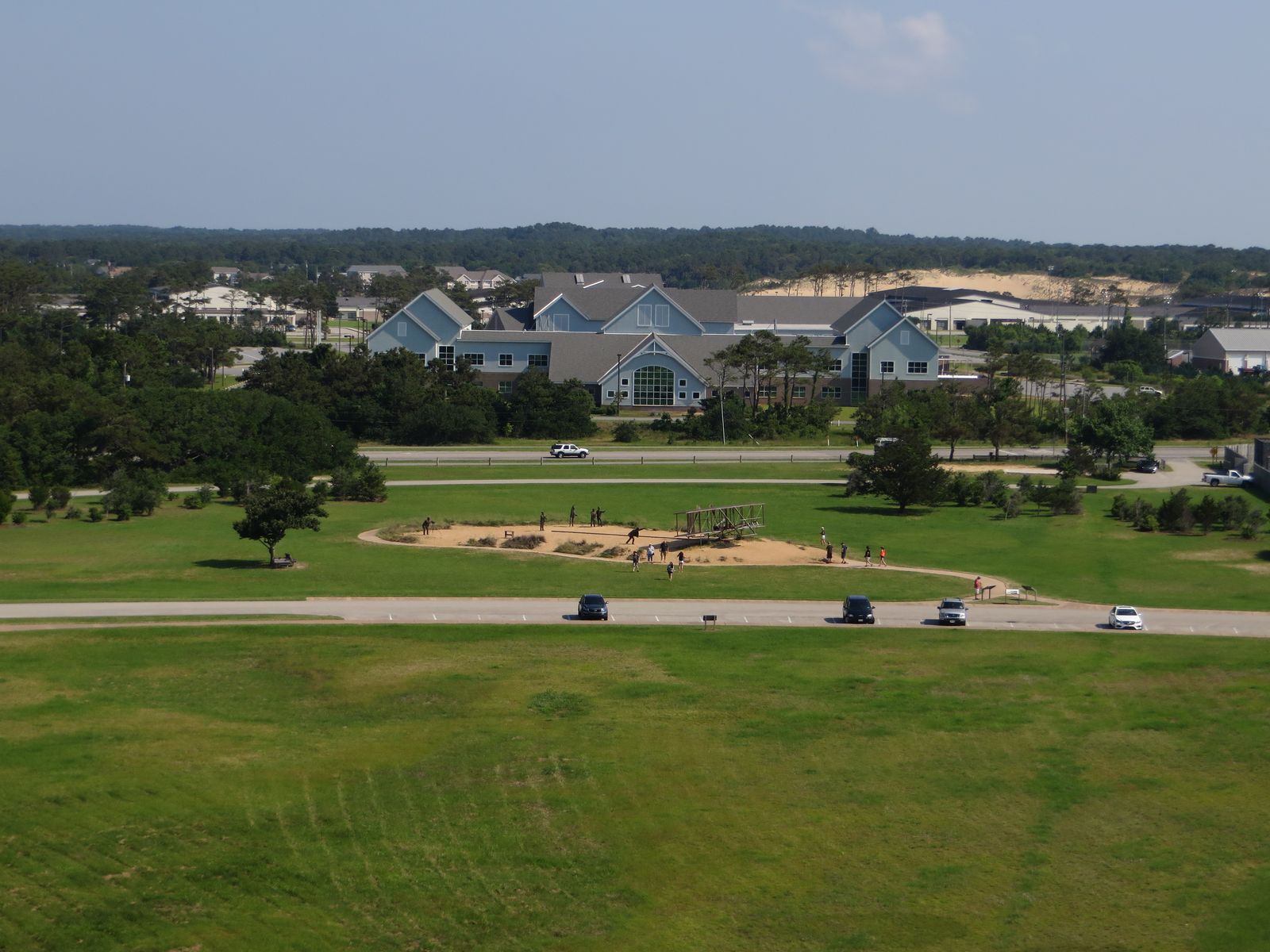
The Wrights' achievement was slow to be recognized, but its importance was undeniable, and in 1927 Congress authorized a memorial at the site. A 60-foot granite pylon atop the great sand dune of Big Kill Devil Hill — by then anchored with vegetation — was dedicated in 1932. Today the National Park Service preserves the grounds, with boulders marking the takeoff point and the four landings, a visitor center, and a full-scale reproduction of the 1903 Flyer.
Historic Images
Interesting Facts
- The first powered flight, on December 17, 1903, lasted just 12 seconds and covered 120 feet.
- The Wright brothers made four flights that morning; the longest, by Wilbur, flew 852 feet in 59 seconds.
- The brothers were bicycle mechanics from Dayton, Ohio, who chose Kitty Hawk for its steady winds and soft, sandy dunes.
- A 60-foot granite monument, dedicated in 1932, stands atop Big Kill Devil Hill, the dune from which they flew their gliders.
- Stone markers on the field show the takeoff point and where each of the four 1903 flights touched down.
Visiting Today
- Hours
- The memorial grounds and visitor center are open daily except Christmas, with hours that vary by season. Check the National Park Service for current times.
- Admission
- An entrance fee is charged, valid for several days. National Park passes are accepted.
- Best time to visit
- Spring and fall bring mild Outer Banks weather; December 17 sees an annual celebration of the anniversary of the first flight.
- Nearby
- The beaches of the Outer Banks, Jockey's Ridge State Park, and the town of Kitty Hawk.
Walk the flight line to appreciate how short that first 120-foot flight was, then climb Big Kill Devil Hill to the monument for sweeping views. Winds can be strong and exposed, so dress accordingly.
Frequently Asked Questions
What happened at the Wright Brothers National Memorial?
It marks the site where Orville and Wilbur Wright made the first successful powered airplane flights on December 17, 1903, near Kitty Hawk, North Carolina.
How long was the first airplane flight?
The first flight, piloted by Orville Wright, lasted 12 seconds and covered 120 feet. The longest of the four flights that day traveled 852 feet in 59 seconds.
Why did the Wright brothers fly at Kitty Hawk?
They chose the Outer Banks of North Carolina for its steady winds, soft sand for safe landings, and isolation, ideal conditions for their glider and flight experiments.
Can you visit the Wright Brothers National Memorial?
Yes. The National Park Service site near Kill Devil Hills has the granite monument, markers tracing the 1903 flights, a visitor center, and a reproduction of the Wright Flyer.