20th Century · Ohio
Rock and Roll Hall of Fame
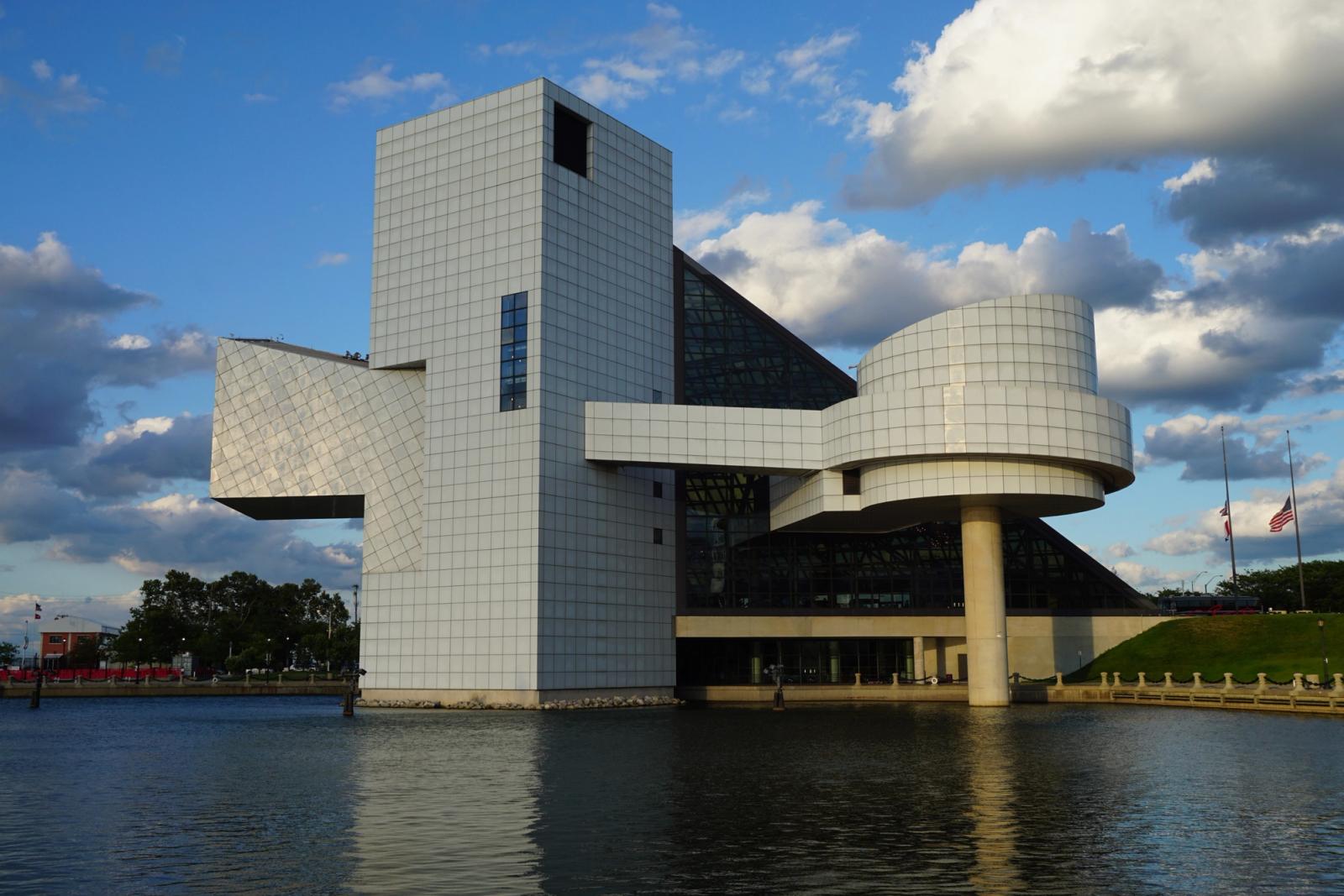
The Rock and Roll Hall of Fame building. — Lance Anderson
Why Rock and Roll Hall of Fame Matters
A glass pyramid on the shore of Lake Erie housing the artifacts of a genre born from radio, rebellion, and racial crossover, the Rock and Roll Hall of Fame gave a permanent home to a history that for years existed only as an idea and an induction ceremony.
By the Numbers
Founding
- Founded
- 1983, by a foundation including Atlantic Records co-founder Ahmet Ertegun
- Opened
- 1995, on the shore of Lake Erie
History
- First induction
- 1986, in New York, honoring pioneers including Chuck Berry and Elvis Presley
- Location choice
- Cleveland won the museum site in the late 1980s partly on radio history and a fan campaign
Architecture
- Architect
- I.M. Pei
Rules
- Eligibility rule
- Artists qualify 25 years after their first commercial recording
Exhibits
- Collection
- Instruments, costumes, handwritten lyrics, and artifacts donated by inducted artists
Timeline
- 1983The Rock and Roll Hall of Fame Foundation is established
- 1986The first induction ceremony is held in New York
- 1995The museum building, designed by I.M. Pei, opens in Cleveland
Complete History
A group of music industry figures including Atlantic Records co-founder Ahmet Ertegun established the Rock and Roll Hall of Fame Foundation in 1983 to formally recognize the musicians, producers, and executives who shaped rock music. The foundation held its first induction ceremony in New York in 1986, honoring early pioneers including Chuck Berry, James Brown, Ray Charles, Sam Cooke, Fats Domino, Buddy Holly, Jerry Lee Lewis, Elvis Presley, and Little Richard, years before any physical museum existed.
Several cities lobbied to host a permanent museum, and Cleveland won the site in the late 1980s, aided by the city's rock radio history and a large fan campaign organized by local station WMMS. Architect I.M. Pei, already famous for the Louvre Pyramid in Paris, designed a striking glass pyramid rising from a cylindrical tower on the shore of Lake Erie.
The museum opened to the public in 1995, finally giving the foundation's decade of inductees a permanent home for donated instruments, stage costumes, and handwritten lyrics. Artists remain eligible for induction 25 years after their first commercial recording, a rule that keeps the Hall's story continuously expanding alongside the genre it honors.
Historic Images
Interesting Facts
- The Rock and Roll Hall of Fame Foundation held induction ceremonies for nearly a decade before the museum building itself existed.
- Cleveland won the right to host the museum partly through a radio station-driven fan campaign.
- The building was designed by renowned architect I.M. Pei.
- Artists become eligible for induction 25 years after their first commercial recording.
- The museum's collection includes instruments, stage costumes, and handwritten lyrics donated by inducted musicians.
Visiting Today
- Hours
- Daily; hours vary seasonally
- Admission
- Paid admission
- Best time to visit
- Weekday mornings for smaller crowds
- Nearby
- Great Lakes Science Center, Cleveland Browns Stadium, downtown Cleveland lakefront
Budget several hours — the museum spans multiple floors of exhibits, films, and listening stations
Frequently Asked Questions
Why is the Rock and Roll Hall of Fame in Cleveland?
Cleveland lobbied hard for the museum in the late 1980s, citing the city's rock radio history and organizing a large fan campaign, and won the site over other candidate cities including New York and Memphis.
When was the first induction ceremony?
In 1986, in New York, nearly a decade before the museum building in Cleveland opened, honoring early rock pioneers such as Chuck Berry, Ray Charles, and Elvis Presley.
Who designed the museum building?
Architect I.M. Pei, known for works like the Louvre Pyramid, designed the museum's distinctive glass pyramid and tower structure on the shore of Lake Erie.
How does an artist become eligible for induction?
Artists become eligible 25 years after the release of their first commercial recording, though eligibility does not guarantee induction, which is voted on by an international panel.