Civil Rights · Georgia
Martin Luther King Jr. National Historical Park
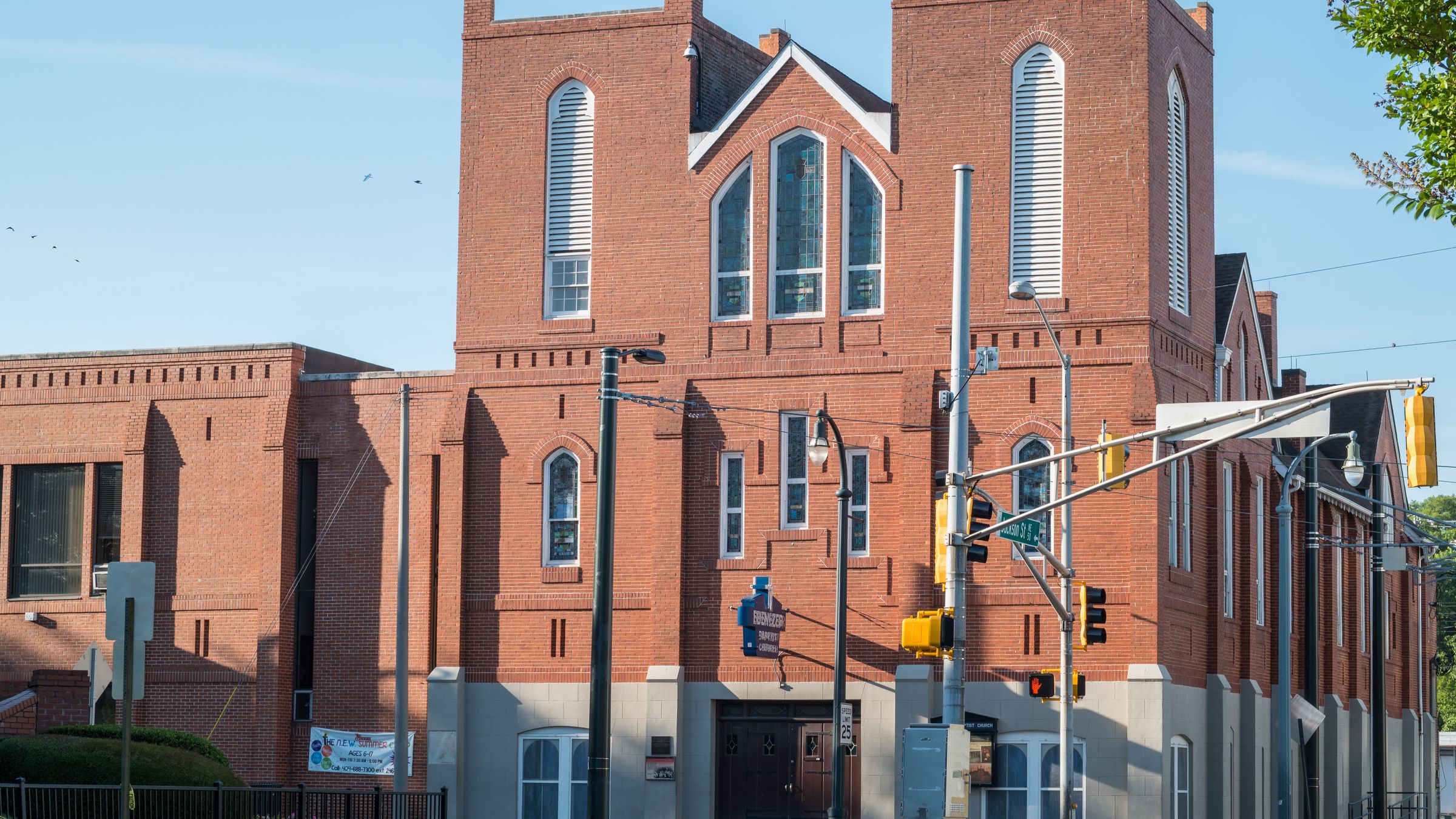
Also known as Ebenezer Baptist Church
The historic Ebenezer Baptist Church, spiritual home of the King family. — Marc Merlin
Why Martin Luther King Jr. National Historical Park Matters
Along a few blocks of Auburn Avenue in Atlanta stand the places that made Martin Luther King Jr. and the places that now hold his memory: the house where he was born, the church where he and his father preached, and the reflecting pool where he and Coretta Scott King are entombed. Together they trace a life from a Black middle-class Atlanta childhood to the pulpit that helped lead a moral revolution, making this modest district one of the most significant civil rights landscapes in the country.
By the Numbers
History
- Birthplace
- 501 Auburn Ave, born Jan. 15, 1929
- Church founded
- Ebenezer Baptist Church, 1886
- Neighborhood
- Sweet Auburn, historic Black business district
People
- Founded King Center
- Coretta Scott King, 1968
Memorial
- Tomb
- Crypt at the King Center reflecting pool
Designation
- National Historic Site
- 1980
- National Historical Park
- Redesignated 2018
Timeline
- 1886Ebenezer Baptist Church is founded on Auburn Avenue
- 1929Martin Luther King Jr. is born on January 15 in the family home
- 1947King is ordained and begins preaching at Ebenezer Baptist Church
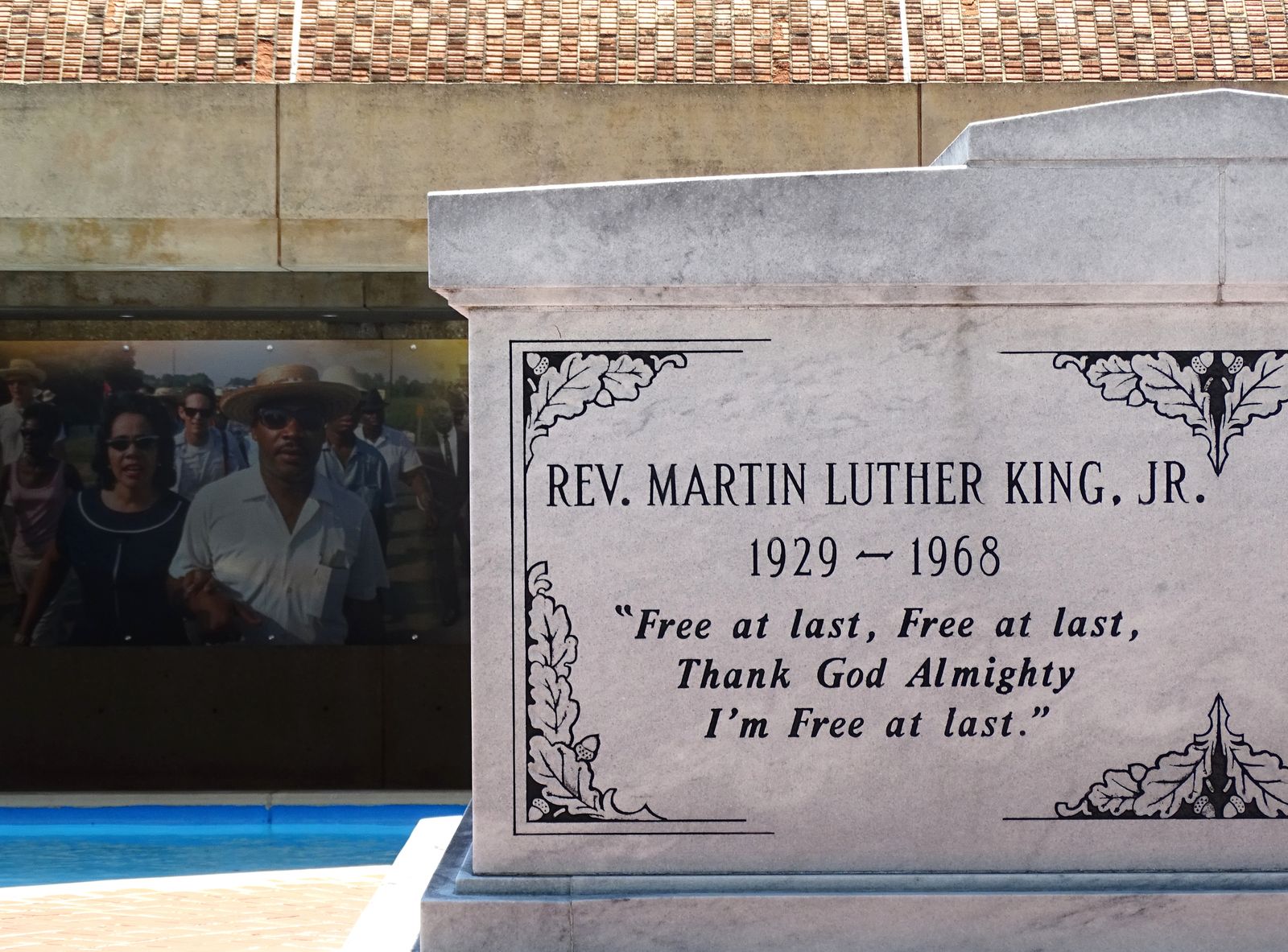
- 1968King is assassinated in Memphis on April 4 and buried in Atlanta
- 1968Coretta Scott King founds the King Center beside Ebenezer
- 1980Congress establishes the Martin Luther King Jr. National Historic Site
- 2018The site is redesignated a National Historical Park
Complete History
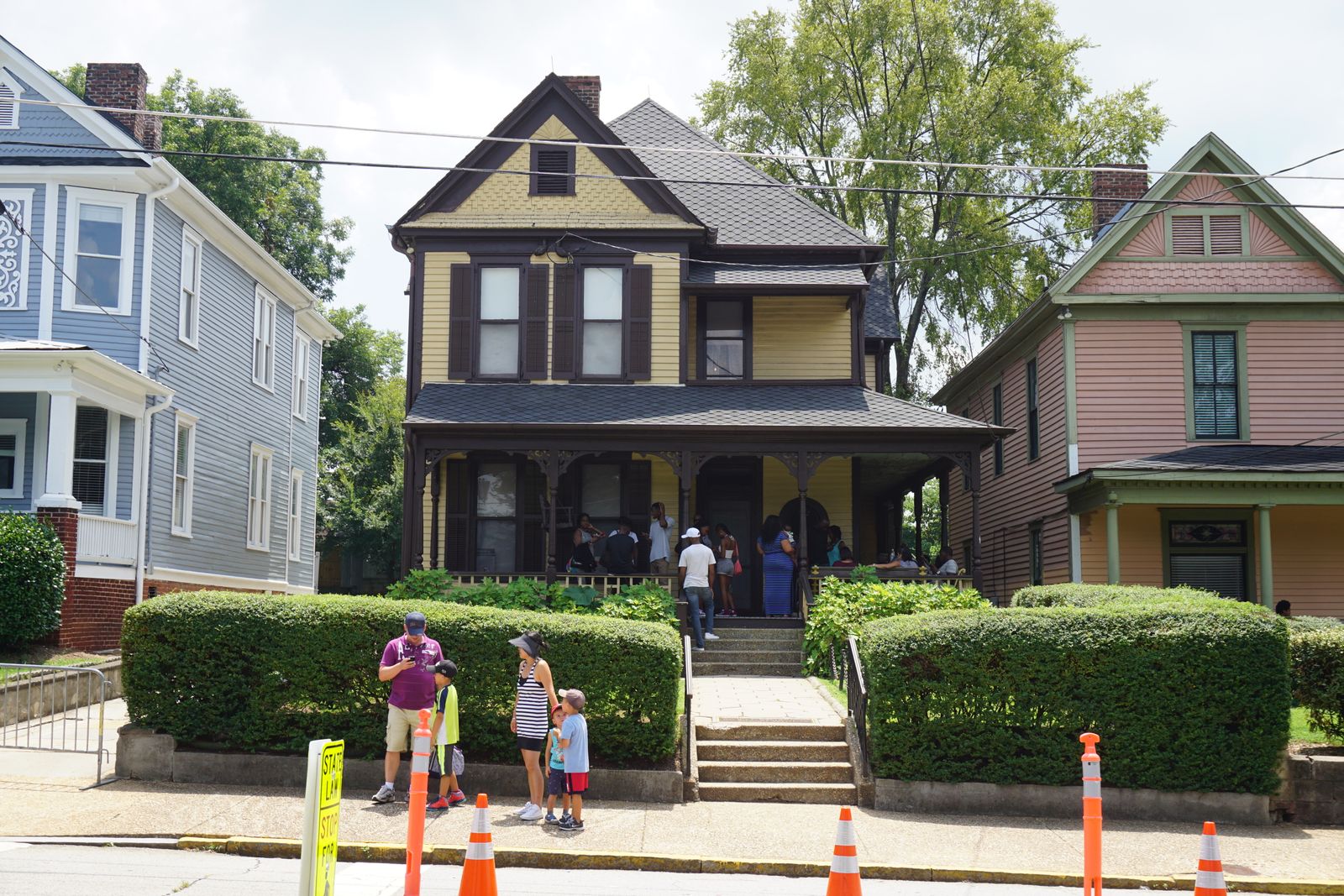
Martin Luther King Jr. was born on January 15, 1929, in a Queen Anne house on Auburn Avenue built in 1895, in the heart of Atlanta's thriving Black business and cultural district known as 'Sweet Auburn.' Two blocks away stood Ebenezer Baptist Church, built in 1886, where King's grandfather and then his father, Martin Luther King Sr., served as pastor. King himself was ordained there and later co-pastored alongside his father.
It was in Ebenezer's pulpit and in the surrounding Auburn Avenue community that King absorbed the traditions of the Black church and refined the oratory that would carry the civil rights movement from Montgomery to Selma to Washington. After his assassination in Memphis on April 4, 1968, King was returned to Atlanta and buried on the grounds his family and the King Center later developed alongside Ebenezer.
Coretta Scott King founded the King Center adjacent to the church in 1968 to continue his work, and King's crypt sits at the center of a reflecting pool inscribed with words from his 'I Have a Dream' speech. In 1980 Congress established the Martin Luther King Jr. National Historic Site, redesignated a National Historical Park in 2018, preserving the birth home, both the historic and new Ebenezer Baptist Church buildings, and the King Center's memorial grounds.
Historic Images
Interesting Facts
- MLK was born in 1929 in a Queen Anne house on Auburn Avenue, two blocks from Ebenezer Baptist Church.
- He was ordained and later co-pastored at Ebenezer alongside his father, Martin Luther King Sr.
- Auburn Avenue's 'Sweet Auburn' district was one of the most prosperous Black business communities in the segregated South.
- Coretta Scott King founded the King Center in 1968 to continue her husband's work; his crypt sits at its reflecting pool.
- The site became a National Historical Park in 2018, forty years after its original designation as a National Historic Site.
Visiting Today
- Hours
- The visitor center, birth home, and church grounds are open daily; birth home tours require timed tickets — check the NPS site.
- Admission
- Free, including ranger-led birth home tours (reserve ahead in busy seasons).
- Best time to visit
- Any season; mid-January around the MLK holiday draws large commemorative crowds.
- Nearby
- The Sweet Auburn Historic District and the National Center for Civil and Human Rights are nearby in downtown Atlanta.
Reserve a birth home tour in advance, then walk Auburn Avenue to the historic Ebenezer Baptist Church and the King Center's reflecting pool.
Frequently Asked Questions
What can you see at the MLK National Historical Park?
The park preserves Martin Luther King Jr.'s birth home, the historic Ebenezer Baptist Church where he preached, and the King Center, including his crypt at the reflecting pool.
Why is Ebenezer Baptist Church significant?
It was the spiritual home of the King family for three generations. Martin Luther King Jr. was baptized, ordained, and later co-pastored there alongside his father.
Is Martin Luther King Jr. buried at the site?
Yes. His crypt, alongside Coretta Scott King's, sits at the center of a reflecting pool at the King Center adjacent to Ebenezer Baptist Church.
Can you visit the birth home and church?
Yes. The National Park Service offers free tours of the birth home by reservation, and the historic Ebenezer Baptist Church and King Center grounds are open to visitors.