Revolutionary · Massachusetts
Faneuil Hall
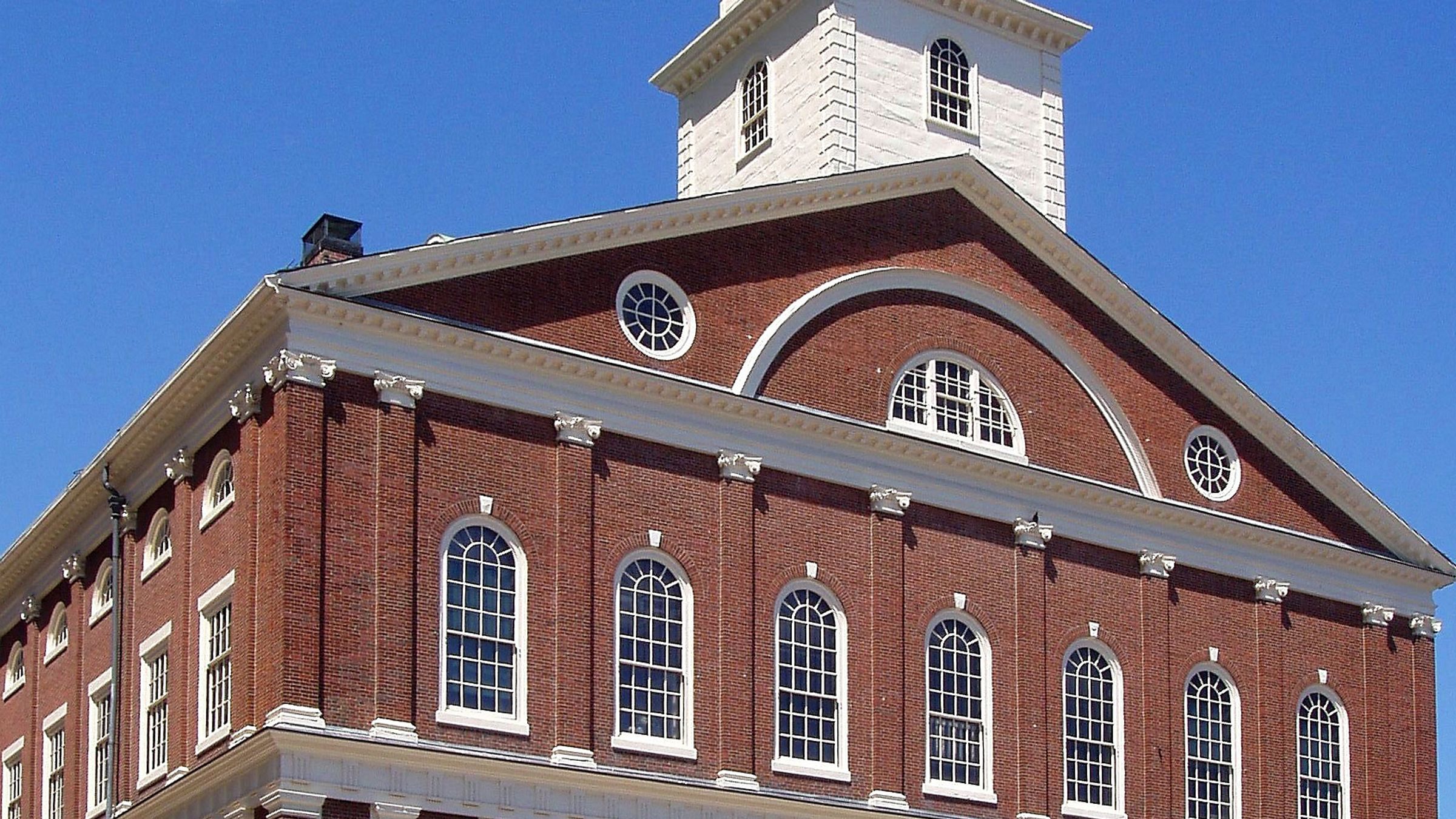
Faneuil Hall, Boston's 'Cradle of Liberty.' — Daderot
Why Faneuil Hall Matters
Faneuil Hall has been called the 'Cradle of Liberty' for the fiery meetings that helped spark the American Revolution. Built as a public market and meeting hall and given to Boston by the merchant Peter Faneuil, its upstairs assembly room became the stage where Samuel Adams, James Otis, and other patriots denounced British taxation and rallied colonists toward independence. Nearly three centuries later it remains a working marketplace, a civic meeting place, and a centerpiece of Boston's Freedom Trail.
By the Numbers
The Building
- Benefactor
- Peter Faneuil
- Designed by
- John Smibert (1742); enlarged by Charles Bulfinch (1806)
- Style
- Georgian
- Nickname
- The Cradle of Liberty
Landmark detail
- Weathervane
- Grasshopper by Shem Drowne, 1742
Today
- Part of
- Boston National Historical Park & the Freedom Trail
Timeline
- 1742Faneuil Hall is completed to John Smibert's design.
- 1743The finished hall is presented to the town of Boston.
- 1761Fire destroys the interior; it is rebuilt by 1762.
- 1760s-70sPatriots hold revolutionary protest meetings in the hall.
- 1806Charles Bulfinch enlarges the hall to its present size.
- 1974Becomes part of the newly created Boston National Historical Park.
Complete History
The wealthy Boston merchant Peter Faneuil offered to build the town a central market house at his own expense, and the hall — designed by the painter John Smibert — was completed in 1742. Faneuil died soon after, and the building was named in his honor. It combined a ground-floor marketplace with a large meeting hall above, a pairing that would shape its role in the decades to come.
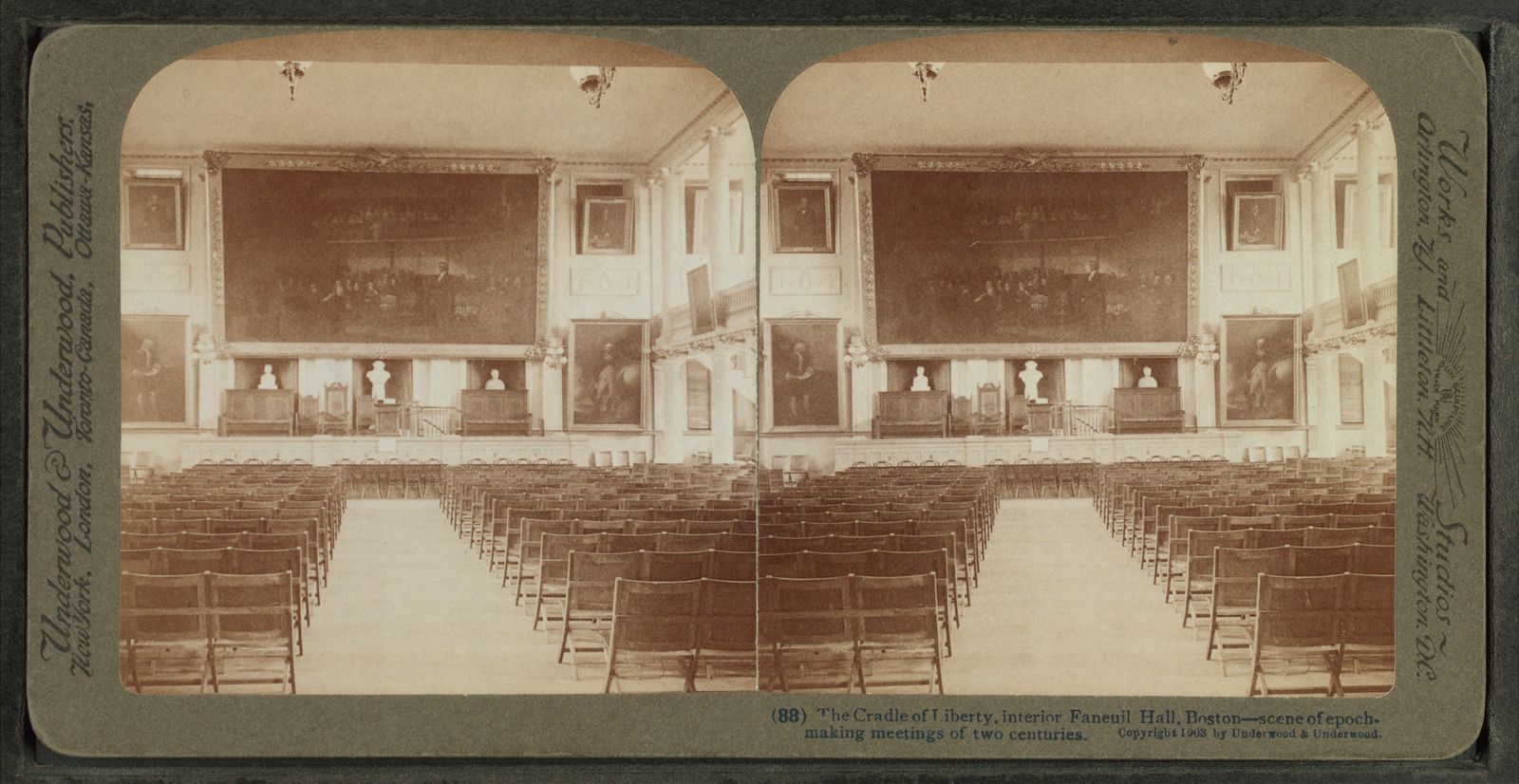
In the years before the Revolution, that meeting hall became a forum for protest. Here Samuel Adams, James Otis, and others rallied Bostonians against the Sugar Act, the Stamp Act, and 'taxation without representation,' earning Faneuil Hall its enduring nickname, the Cradle of Liberty. Fire gutted the building in 1761, but it was rebuilt by 1762 and the meetings resumed.
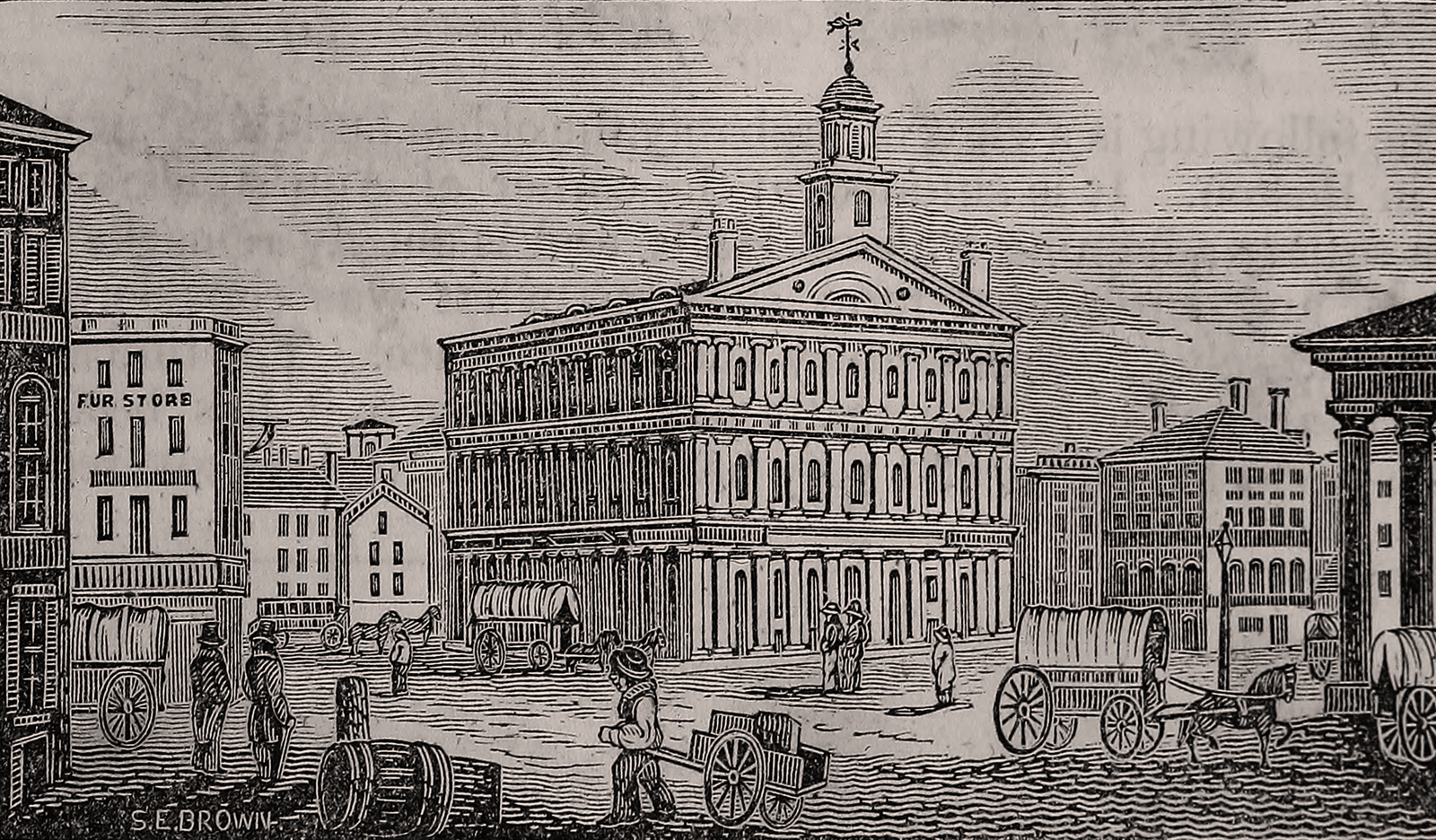
In 1805-1806 the architect Charles Bulfinch greatly enlarged the hall, doubling its width and adding a third story while keeping its Georgian character and the famous grasshopper weathervane crafted by Shem Drowne in 1742. Faneuil Hall went on to host debates over abolition, women's suffrage, and other causes. Today it is part of Boston National Historical Park and the Freedom Trail, still ringed by market stalls and still used for public gatherings.
Historic Images
Interesting Facts
- Faneuil Hall is nicknamed the 'Cradle of Liberty' for the pre-Revolution protest meetings held in its second-floor assembly room.
- The hall was a gift to Boston from the merchant Peter Faneuil, who died in 1743, shortly after it was completed.
- A gilded grasshopper weathervane, made by Shem Drowne in 1742, has perched atop the cupola for nearly three centuries and is a beloved Boston symbol.
- Architect Charles Bulfinch doubled the size of the building in 1805-1806, giving it the form it has today.
- The ground floor still operates as a marketplace, part of the larger Faneuil Hall Marketplace beside historic Quincy Market.
Visiting Today
- Hours
- The Great Hall on the second floor is generally open to visitors daily when not in use for events, with National Park Service staff on site. Ground-floor shops keep marketplace hours.
- Admission
- Admission to the historic hall is free. Ranger talks are offered as staffing allows.
- Best time to visit
- Weekday mornings are calmer; the surrounding marketplace is liveliest on weekends and through the summer tourist season.
- Nearby
- Quincy Market, the Freedom Trail, the Paul Revere House, and Boston's North End.
Faneuil Hall is a working civic space, so the Great Hall occasionally closes for events — check on the day. It pairs naturally with a walk along the Freedom Trail and a stop at the neighboring Quincy Market food stalls.
Frequently Asked Questions
Why is Faneuil Hall called the Cradle of Liberty?
Its upstairs meeting hall hosted fiery protests against British taxation in the 1760s and 1770s, led by Samuel Adams and others, helping to spark the American Revolution.
Who built Faneuil Hall?
It was funded by the Boston merchant Peter Faneuil and designed by the painter John Smibert, opening in 1742. Architect Charles Bulfinch later enlarged it in 1805-1806.
Can you visit Faneuil Hall?
Yes. Faneuil Hall is part of Boston National Historical Park and the Freedom Trail. Visitors can see the historic meeting hall upstairs, and the ground floor is still a marketplace.
Is Faneuil Hall still used today?
Yes. It remains a public meeting place and marketplace and is a major stop on Boston's Freedom Trail, alongside the adjacent Quincy Market.