19th Century · California
Cable Car System
Also known as San Francisco Cable Cars
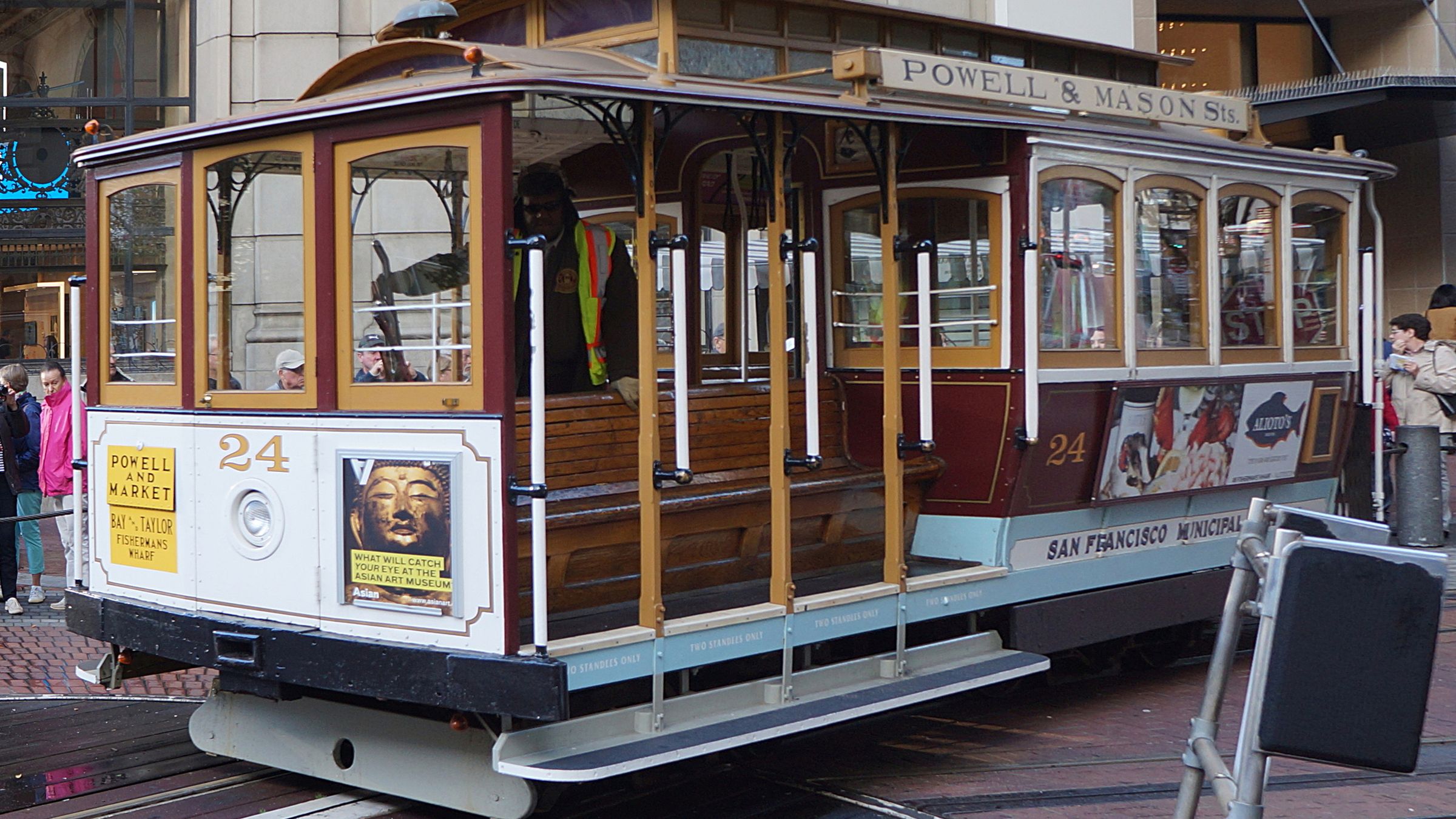
A cable car in San Francisco. — Pierre André
Why Cable Car System Matters
The last manually operated cable car system on Earth, saved from extinction by a grassroots ballot campaign, and the only moving object ever designated a National Historic Landmark.
By the Numbers
History
- Inventor
- Andrew Smith Hallidie
- First line
- Clay Street, opened August 2, 1873
- Peak scale
- 8 companies, 23 lines, 100+ miles of track (early 1900s)
- Preservation
- Saved by the 1947 'Save the Cable Cars' ballot campaign led by Friedel Klussmann
Engineering
- Mechanism
- Cars grip a continuously moving underground cable powered by a central powerhouse
Designation
- National Historic Landmark
- Designated 1964 — the only moving NHL in the U.S.
Today
- Remaining lines
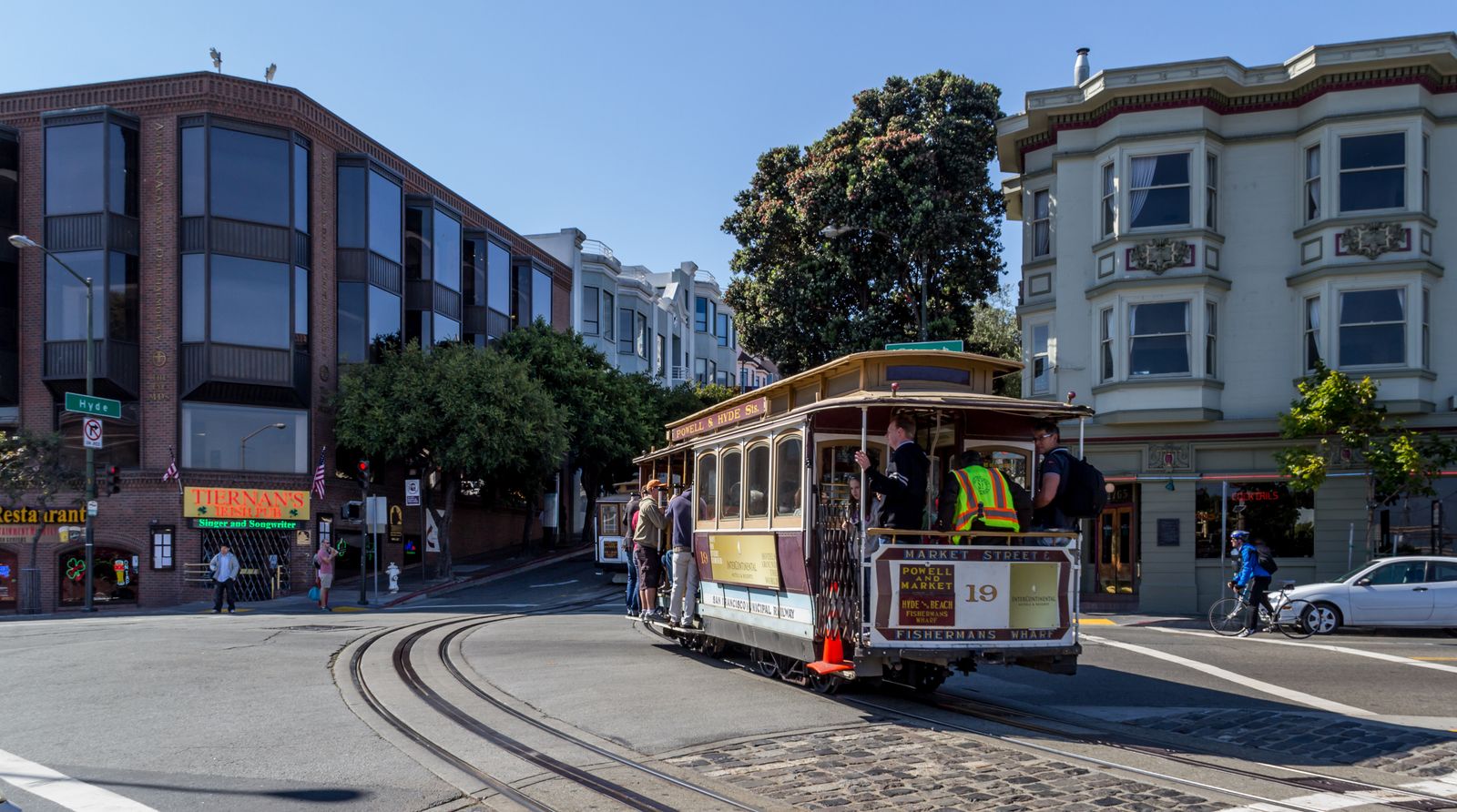
- Powell-Mason, Powell-Hyde, and California Street
Timeline
- 1873Andrew Smith Hallidie's Clay Street cable car line opens on August 2
- 1890sThe system peaks with eight companies operating 23 lines over 100+ miles of track
- 1906The earthquake and fire destroy much of the system's infrastructure
- 1947Friedel Klussmann's 'Save the Cable Cars' campaign preserves the system by ballot measure
- 1964The system is declared a National Historic Landmark
Complete History
Inventor Andrew Smith Hallidie, whose father held wire-rope patents, is said to have been moved to act after witnessing a horse-drawn streetcar's team slip on a wet, steep San Francisco street and be dragged to their deaths. Hallidie adapted his family's cable technology to move streetcars up the city's punishing hills without horses, and his first line opened on Clay Street on August 2, 1873.
The system expanded rapidly, and by the early 1900s eight competing companies operated 23 lines across more than 100 miles of track, each car gripping onto a continuously moving underground cable powered by a central powerhouse. The 1906 earthquake and fire destroyed much of this infrastructure, and the subsequent rise of the automobile made cable cars seem increasingly obsolete; by the mid-20th century the city considered replacing the remaining lines with buses entirely.
In 1947, San Francisco resident Friedel Klussmann organized a grassroots 'Save the Cable Cars' campaign that forced a ballot measure preserving the system, and voters overwhelmingly agreed. The surviving network was declared a National Historic Landmark in 1964 — the only moving object ever to receive that designation — and today three lines, Powell-Mason, Powell-Hyde, and California Street, continue to carry both commuters and tourists up San Francisco's hills.
Historic Images
Interesting Facts
- The San Francisco cable car system is the last manually operated cable car system in the world.
- It's the only moving object ever designated a National Historic Landmark.
- The cars have no engines; they grip onto a continuously moving cable running beneath the street.
- A 1947 grassroots campaign by Friedel Klussmann saved the system from being replaced by buses.
- At its early-1900s peak, eight competing companies ran 23 lines across more than 100 miles of track.
Visiting Today
- Hours
- Cars run roughly 6am–10pm daily, later on weekends
- Admission
- Single ride fare (or a Muni Passport for unlimited rides)
- Best time to visit
- Early morning, to avoid tourist lines at the Powell Street turnaround
- Nearby
- Fisherman's Wharf, Lombard Street, Chinatown
Ride the California Street line for a shorter wait and equally dramatic hills
Frequently Asked Questions
How does a cable car actually move without an engine?
Each car has a mechanical grip that clamps onto a cable running continuously beneath the street, powered by winding machinery in a central powerhouse; the gripman controls speed by tightening or loosening the grip on the moving cable.
Why did San Francisco almost get rid of the cable cars?
By the mid-20th century, buses seemed cheaper and more modern, and the city considered phasing the cable cars out; a 1947 grassroots campaign led by Friedel Klussmann forced a ballot measure that saved them.
How many cable car lines are left?
Three: the Powell-Mason, Powell-Hyde, and California Street lines, down from 23 lines at the system's early-1900s peak.
Is it true this is the only moving National Historic Landmark?
Yes — designated in 1964, the San Francisco cable car system is the only National Historic Landmark that moves.